
Part 6 – Here this hoaxer Dr. Miklos Nyiszli lists 4 symptoms he personally claims to have identified of cyanide poisoning victims. Only 1 of the four (dilated pupils) are actual major symptoms in most victims. Nyiszli completely fails to list symptoms consistent with cyanide poisoning. Which is something else for this inveterate fraud, because he accurately listed the expected symptoms of cyanide poisoning in 1930 in his own pathetic dissertation where he claims 43% of female suicides were due to menstruation, and mostly sunny days are the leading cause of unaliving one’s self.
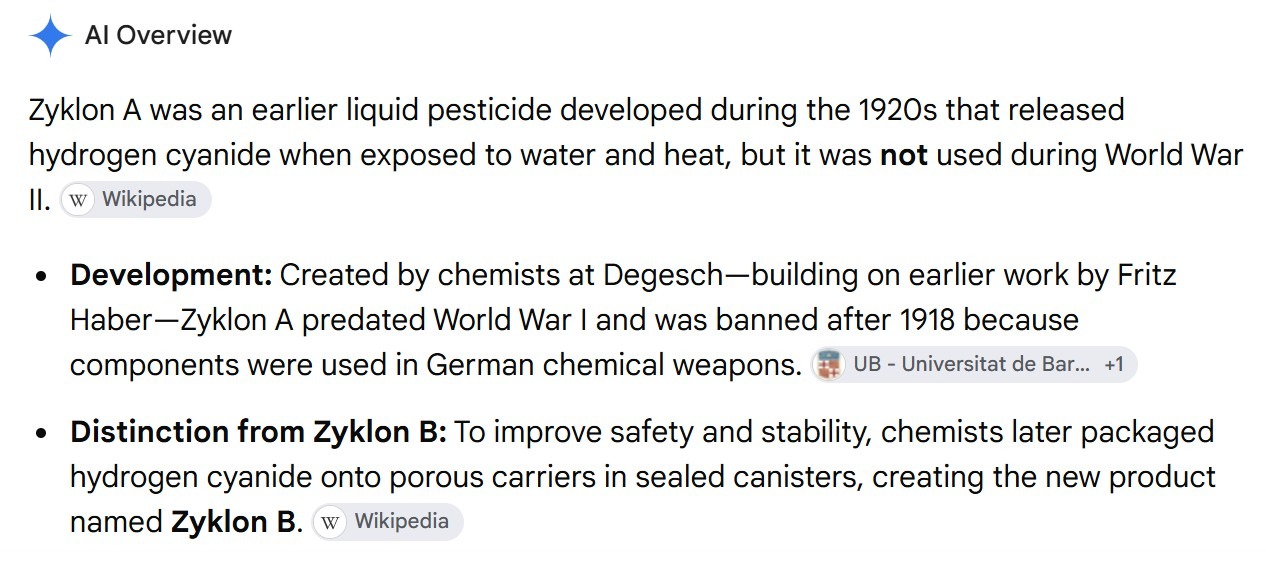
Miklos Nysizli claims to see Zyklon A being used in Auschwitz – Zyklon A was a liquid form of cyanide that WAS NEVER USED DURING WORLD WAR II. It was already phased out.
And more! discussion after this fraudster’s article…
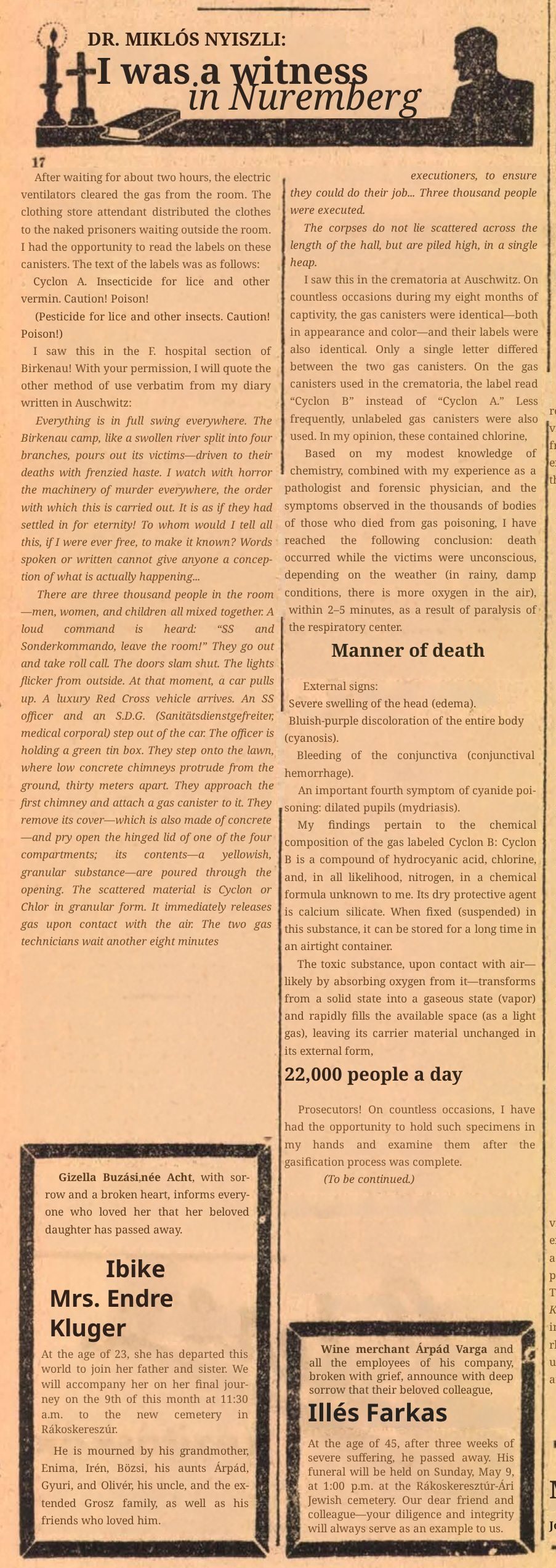
May 9 1948

Let’s ask AI if Miklos Nyiszli is truthful or as full of shit about seeing cyanide poisoning victims as he is about taking the witness stand at the IG Farben Nuremberg trials.
if someone claims to have witnessed a body with the following symptoms what would you say :
severe swelling of the head (edema)
bluish-purple discoloration of the entire body (cyanosis)
bleeding of the conjunctiva (conjunctival hemmorrhage)
dilated pupils (mydriasis)
Assuming you are describing forensic or medical findings rather than an active emergency, this combination of symptoms is a classic presentation of acute mechanical asphyxia, specifically consistent with traumatic asphyxia or manual/ligature strangulation (such as hanging or suffocation).
Here is a breakdown of what each of these findings indicates medically:
-
Severe swelling of the head (Edema) & Bluish-purple discoloration (Cyanosis): This is often referred to as a “mask” of cyanosis and swelling. It typically occurs due to a sudden, severe increase in upper body and venous pressure—often caused by a heavy weight compressing the chest or a constriction around the neck. This prevents blood from draining out of the head and face, causing capillaries to engorge, rupture, and pool deoxygenated blood in the upper extremities and face.
-
Bleeding of the conjunctiva (Conjunctival hemorrhage): These tiny pinpoint hemorrhages (petechiae) happen when extreme intravascular pressure causes delicate capillaries in the eyes and eyelids to burst. They are a hallmark sign of acute asphyxial death or severe thoracic compression.
-
Dilated pupils (Mydriasis): Fixed and dilated pupils occur when the brain is deprived of oxygen (anoxia) and the central nervous system shuts down, or as a direct result of profound shock and trauma.
What specific context or aspect of these findings would you like to explore further?
could a witness be telling the truth or lying if they said they saw a cyanide victim with these symptoms
Based on medical and forensic toxicology, a witness claiming to see cyanide poisoning accompanied by this specific set of symptoms—particularly severe generalized cyanosis (bluish-purple discoloration) and marked head edema with conjunctival hemorrhages—would medically be considered unreliable or incorrect, strongly suggesting they are describing something else.
Here is why those symptoms contradict the medical reality of acute cyanide poisoning:
1. The Color Conflict (Cyanosis vs. Cherry-Red Skin)
-
The Claim: A bluish-purple discoloration of the entire body (cyanosis).
-
The Reality of Cyanide: Cyanide blocks the body’s cells from utilizing oxygen (histotoxic hypoxia). Because the tissues cannot extract oxygen from the blood, the venous blood remains heavily oxygenated. Classically, this results in skin, mucous membranes, and blood that appear bright pink or cherry-red, not blue. While a terminal or shock-induced cyanosis can occasionally manifest late in the dying process, pure or whole-body cyanosis contradicts the textbook presentation of cyanide toxicity.
2. The Physical Presentation (Edema and Hemorrhages)
-
The Claim: Severe swelling of the head and bleeding of the conjunctiva.
-
The Reality of Cyanide: Cyanide is a systemic metabolic poison that causes cellular asphyxiation, leading to rapid collapse, coma, and respiratory arrest. It does not mechanically obstruct blood flow out of the head, nor does it cause sudden, severe facial edema and petechial/conjunctival hemorrhaging. Those specific physical signs require mechanical asphyxia—meaning a physical, external force (such as strangulation, hanging, or crushing weight on the chest) that violently traps blood in the upper body via high venous pressure.
Conclusion
While a witness can always be lying or mistaken, in this scenario, their description mismatches the physiological mechanism of cyanide. The symptoms listed (head edema, widespread cyanosis, conjunctival hemorrhages, and mydriasis) point textbook-style toward mechanical asphyxiation or traumatic compression, not acute poisoning by cyanide.
Are you looking into the distinction between chemical asphyxiants (like cyanide) and mechanical asphyxiants for a specific historical or investigative case study?
22000 Gassed A Day?
Jewish Holocaust “expert” shysters already threw this figure under the bus. It was said to fit the Soviet propaganda death toll of 4 million Auschwitz dead.
1) is severe swelling of the head (edema) a symptom of cyanide poisoning
No, severe swelling of the head (edema) is not a typical symptom of systemic cyanide poisoning.
While cyanide rapidly disrupts cellular respiration and affects the central nervous system and cardiovascular system, it does not cause generalized head or facial edema.
Here are the key points regarding cyanide poisoning symptoms and fluid accumulation:
- Primary Systemic Symptoms: Acute cyanide poisoning primarily manifests with rapid breathing, headache, dizziness, confusion, anxiety, drop in blood pressure, seizures, and loss of consciousness.
- Pulmonary Edema: In severe cases, patients can develop pulmonary edema (fluid buildup inside the lungs) due to cardiovascular collapse and severe cellular hypoxia, but this affects the lungs rather than causing swelling of the head or face.
- Local Irritation: Direct contact with liquid cyanide or high concentrations of certain cyanide gases can cause localized irritation or swelling to the eyes or skin upon direct contact, but it does not trigger systemic head swelling.
If someone is experiencing sudden, severe swelling of the head, face, or airway, it is typically indicative of other medical emergencies, such as a severe allergic reaction (anaphylaxis), angioedema, trauma, or specific types of toxic exposures unrelated to cyanide.
is bluish-purplish coloration of the entire body (cyanosis) consistent with cyanide poisoning victims
No, a bluish-purplish coloration of the entire body (cyanosis) is not classically consistent with acute cyanide poisoning.
Instead, acute cyanide poisoning is traditionally associated with a bright red or “cherry-red” appearance of the skin and blood.
Why Cyanosis Does Not Typically Occur
-
Mechanism of Toxicity: Cyanide works by binding to cytochrome c oxidase, blocking cells from utilizing oxygen. Because the body’s tissues cannot extract and consume the oxygen delivered to them, the oxygen remains in the blood stream.
-
Oxygenated Blood in Veins: This results in an abnormally high concentration of oxygen in the venous blood (a process sometimes called the “arterialization” of venous blood).
-
Skin Manifestation: Because venous blood retains its oxygen—and therefore its bright red color—victims often display a characteristic bright pink, flushed, or “cherry-red” skin tone rather than the blue tint (cyanosis) seen in standard asphyxiation or hypoxia.
Exceptions and Nuances
-
Secondary Shock: While cyanide does not directly cause cyanosis, a patient can eventually develop a bluish discoloration if they enter profound terminal shock, circulatory collapse, or severe terminal hypoxia where blood flow stalls entirely. However, this is a secondary phenomenon related to dying tissues and low perfusion, rather than a direct sign of the poison itself.
-
Mixed Exposures: If a person’s poisoning involves smoke inhalation (such as in a structural fire where burning plastics or synthetic materials release both hydrogen cyanide and carbon monoxide), or chemical asphyxiants that induce methemoglobinemia, the physical presentation can be altered.
No, conjunctival hemorrhage (bleeding of the conjunctiva or broken blood vessels on the white of the eye) is not a standard or characteristic symptom of acute cyanide poisoning.
Why It Is Not Typical
-
Systemic Mechanism: Cyanide is a cellular toxin (histotoxic hypoxia) that primarily disrupts cellular oxygen utilization, leading to rapid systemic effects such as headache, dizziness, tachypnea (rapid breathing), confusion, low blood pressure, and seizures. It does not inherently cause localized capillary fragility or spontaneous bleeding in the eyes.
-
Common Causes of Conjunctival Hemorrhage: Broken blood vessels in the eye are usually harmless and typically result from localized mechanical strain (such as violent coughing, sneezing, vomiting, heavy lifting, or straining), direct trauma to the eye, rubbing, or underlying chronic conditions like high blood pressure or diabetes.
Clinical Presentation of the Eyes in Cyanide Poisoning
While subconjunctival bleeding is not a feature, acute cyanide poisoning can affect the eyes in other ways:
-
Mydriasis (Pupillary Dilation): As the body experiences severe oxygen deprivation and neurologic decline, the pupils often dilate and become unreactive in the late or terminal stages of poisoning.
-
Chronic Exposure Distinction: Long-term, chronic exposure to low levels of cyanide (such as through dietary factors like improperly prepared cassava or heavy tobacco use) can lead to optic neuropathy or progressive vision loss, but this involves the optic nerve rather than acute bleeding of the conjunctiva.
are dilated pupils a symptom of cyanide poisoning
Dr. Miklos Nyiszli claims to have seen Zyklon A, a liquid form of cyanide without the later porous carrier material of Zyklon B in use for fumigations at Auschwitz-Birkenau. Zyklon A was phased out after World War 1 and was never used in WW2 and never at Auschwitz-Birkenau.
The “Oxygen Content” Claim: Nyiszli writes that “depending on the weather (in rainy, damp conditions, there is more oxygen in the air) … death occurred while the victims were unconscious.” From a meteorological and chemical standpoint, damp or rainy air actually has a lower concentration of oxygen by volume compared to dry air because water vapor ($H_2O$) displaces other atmospheric gases.
So how about we DON’T believe the perjurer (in the affidavit at least, u can’t technically commit perjury if you never take the witness stand and instead just write article after article claiming you did while spewing fabrications) actively lying about taking the witness stand during the Nuremberg trials, because we caught him in 6 million other lies.









[…] Previous Next […]
[…] Part 6 – Dr. Miklos Nyiszli hoax fantasy fiction lying about taking the witness stand at the IG Fa… […]
[…] Part 6 […]